Chuck Ashley is the owner of Ashley Brothers Heating & Cooling in St. Louis, MO, and has been serving local homeowners since 1999. With decades of hands-on experience in the HVAC industry, Chuck brings practical knowledge of heating, cooling, system maintenance, and the unique demands St. Louis weather places on home comfort systems. His goal is to help homeowners make informed, straightforward decisions about their HVAC needs.
If your furnace just made it through another January cold snap or your air conditioner struggled to keep up during a July heat wave, you’re probably wondering how much life your HVAC system actually has left. St. Louis weather doesn’t do mild. Our summers push into the mid-90s with brutal humidity off the rivers, and our winters swing hard the other direction, and that constant back-and-forth wears equipment down faster than manufacturers’ national averages suggest. At Ashley Brothers Heating & Cooling, we get asked almost daily about St. Louis HVAC lifespan, whether it’s time to repair or replace, and the honest answer depends on more than just age.
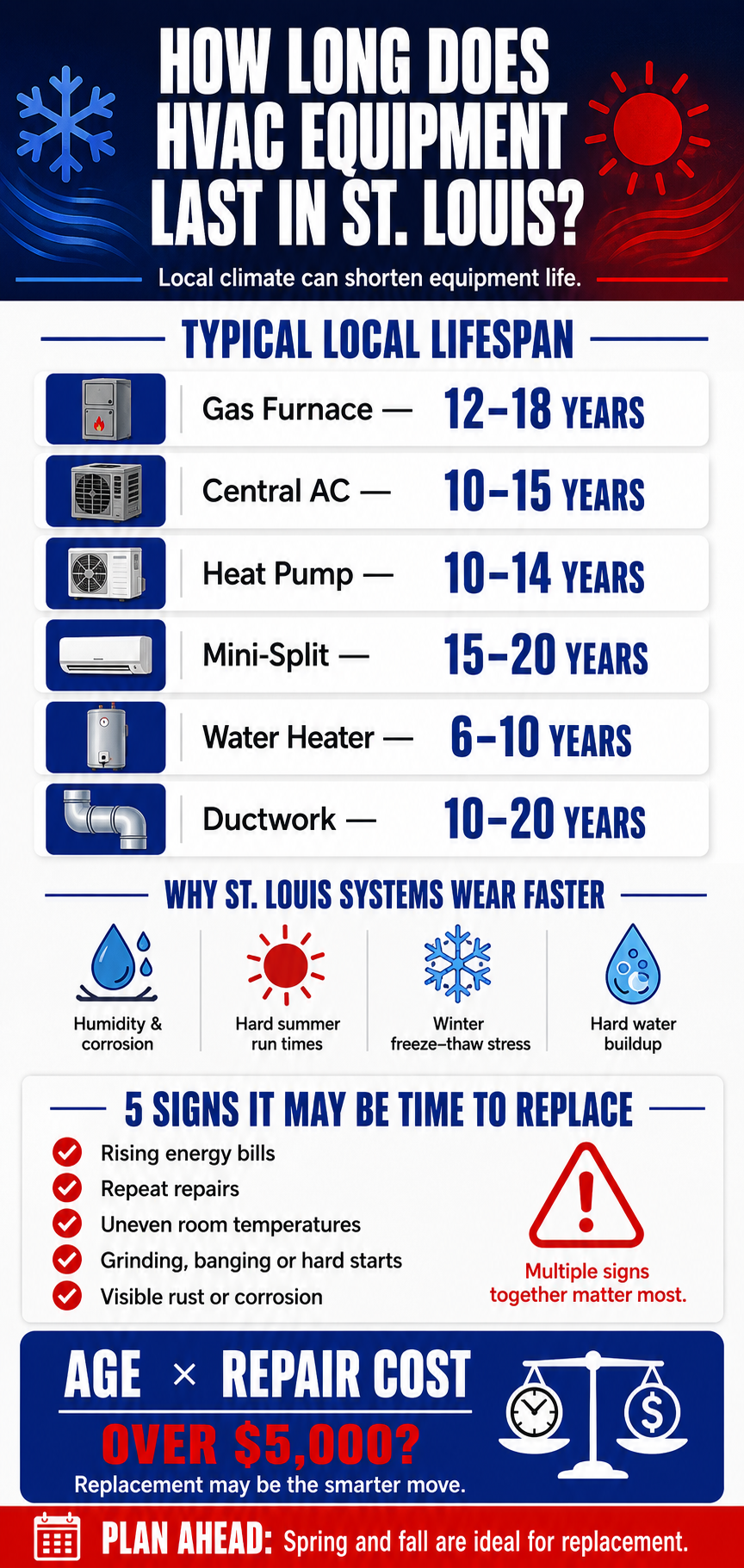
Average HVAC Equipment Lifespan in St. Louis
Equipment Type
National Average Lifespan
Typical St. Louis Lifespan
Why the Difference
Furnace (gas)
15-20 years
12-18 years
Extra winter cycling and humidity-related corrosion
Central Air Conditioner
15-20 years
10-15 years
Long, humid cooling season pushes compressors harder
Heat Pump
15 years
10-14 years
Runs year-round in our swing climate, more wear
Ductless Mini-Split
20 years
15-20 years
Less affected by ductwork and humidity issues
Water Heater
8-12 years
6-10 years
Hard water from municipal supply accelerates tank wear
Ductwork
15-20 years
10-20 years
Older St. Louis homes often have leaky or undersized ducts
How Long Does HVAC Equipment Last in St. Louis?
HVAC equipment in St. Louis typically lasts several years less than the national average because of our humid continental climate and its dramatic seasonal swings. A furnace that might run 18-20 years in a milder climate often needs replacing closer to 12-15 years here, and central air conditioners frequently show real wear by year 10 rather than year 15. We’ve found that the region’s combination of high summer humidity, hard freezes, and older housing stock is the biggest factor separating St. Louis lifespans from the numbers printed on a manufacturer’s brochure.
Why Does St. Louis Weather Shorten HVAC Lifespan?
St. Louis weather shortens HVAC lifespan because equipment here rarely gets a break. According to the National Weather Service’s St. Louis climatology summary, the region sits at the meeting point of the Mississippi and Missouri Rivers and regularly pulls in warm, humid air from the Gulf each summer, with temperatures of 90 degrees or higher on roughly 35 to 40 days a year. That kind of sustained heat and humidity forces air conditioners to run long, hard cycles for months at a time, while winter cold snaps keep furnaces working overtime. That constant demand, with almost no shoulder season for equipment to rest, adds up to more wear per calendar year than a system installed in a milder region ever sees.
Humidity is the quieter culprit. Moisture in the air accelerates corrosion on coils, electrical connections, and heat exchangers. We routinely see condensers in St. Louis backyards showing rust and coil degradation years before a similar unit would in a drier climate. Add in the hard water common across St. Louis County and the city, and it’s easy to see why local lifespans run shorter. Missouri American Water’s St. Louis region water quality report lists total hardness in the 4 to 13 grains per gallon range, mineral levels that build scale inside water heaters and can affect humidifiers tied into HVAC systems over time.
What Are the Warning Signs an HVAC System Needs Replacement?
The clearest warning signs that an HVAC system needs replacement are rising energy bills, frequent repairs, uneven temperatures between rooms, and a system that’s simply aging out. Any one of these on its own might just mean a repair, but two or three together usually point toward replacement being the smarter long-term move.
Watch for these specific signs in your St. Louis home:
Energy bills climbing year over year even though usage habits haven’t changed
Repair calls happening more than once a season, especially during peak summer or winter stretches
Rooms that never quite match the thermostat setting, particularly upstairs bedrooms in older two-story homes
Strange noises like grinding, banging, or a compressor that struggles to start
Visible rust or corrosion on the outdoor condenser or indoor coil
A system over 12 years old that’s using R-22 refrigerant, which is being phased out and getting expensive to source
Humidity control that feels off, with a home that’s clammy in summer despite the AC running
If you’re seeing several of these at once, waiting it out usually means paying for one more repair before an even bigger failure hits during the worst possible week of summer or winter.
When Should You Call a Professional Instead of Waiting?
You should call a professional as soon as you notice a system struggling to keep up, making unusual noises, or requiring repeat repairs within the same season. Some maintenance is fine to handle yourself. ENERGY STAR’s maintenance checklist recommends inspecting or changing air filters monthly and keeping the area around outdoor units clear, both easy habits during peak season here, especially once overgrown grass and yard debris pile up in St. Louis backyards by midsummer.
Anything involving refrigerant, electrical components, gas connections, or a system that’s short-cycling needs a trained technician. St. Louis’s humidity and temperature extremes mean small issues escalate faster here than in milder climates, so a strange smell or sound is worth a call sooner rather than later.
Not sure if your system needs a look? Schedule An Inspection with our team today.
What Are the Most Common Causes of Early HVAC Failure in St. Louis?
The most common causes of early HVAC failure in St. Louis are oversized cooling loads from humidity, deferred maintenance, aging ductwork in older homes, and hard water damage to water heaters and humidifiers. Ranked by how often we see them in the field:
Humidity overload on the AC system. Units working overtime to dehumidify as well as cool wear out compressors faster.
Skipped maintenance. A missed spring tune-up before a brutal summer often turns a $200 fix into a $2,000 failure.
Aging ductwork. Many homes across St. Louis City and the surrounding county were built decades before modern duct sealing standards, leading to air loss and uneven strain on the system.
Hard water buildup. Sediment in water heaters and steam humidifiers shortens their working life significantly.
Freeze-thaw stress on outdoor units. Winter ice buildup followed by rapid spring thawing can crack components over time.
How Can You Prevent Early HVAC Breakdown?
You can prevent early HVAC breakdown with seasonal maintenance timed to St. Louis’s climate, specifically a spring AC tune-up before the humidity hits and a fall furnace check before the first hard freeze. Change filters every one to three months, more often if you have pets or live near high-traffic roads where dust and pollen build up quickly.
Keep outdoor condensers clear of leaves, grass clippings, and the cottonwood fluff that blankets yards across the region every spring. Indoors, make sure vents aren’t blocked by furniture, and consider a whole-home dehumidifier if your basement or lower level stays damp, which is common in older St. Louis homes with less-than-ideal grading. These small habits genuinely extend equipment life by several years when done consistently.
Seasonal HVAC Maintenance Checklist for St. Louis Homes
A season-by-season maintenance schedule keeps St. Louis systems running longer by matching upkeep to the specific stress each season puts on the equipment. Use this as a quick reference for what to check and when.
Season
Key Task
Why It Matters Locally
Spring
Professional AC tune-up and coil inspection
Gets the system ready before Gulf humidity and 90-degree days set in
Summer
Check filters monthly, clear condenser of debris
Long, humid cooling season means the AC rarely gets a break
Fall
Furnace inspection, heat exchanger check
Catches issues before the first hard freeze hits the region
Winter
Monitor for ice buildup on outdoor units, check carbon monoxide detectors
Freeze-thaw cycles and heavy furnace use raise the stakes
What Results Can You Expect From Timely Replacement?
Timely replacement of aging HVAC equipment typically delivers 15-30% lower energy bills, more even temperatures throughout the home, and fewer emergency repair calls during peak season. Modern energy-efficient HVAC systems in St. Louis are built to handle humidity more efficiently than units from a decade or two ago, which matters enormously in a climate like ours.
Homeowners who replace before a full breakdown also avoid the worst-case scenario: a dead AC during a 95-degree St. Louis heat wave or a failed furnace during a January cold snap, both of which come with rushed decisions and premium emergency pricing.
Common Mistakes Homeowners Make With Aging HVAC Systems
One common mistake is repairing an aging system indefinitely instead of comparing the cumulative repair cost to a replacement. If repairs in a single year approach a third of replacement cost, that money is usually better spent moving forward. Another mistake is ignoring proper sizing during replacement. An oversized system cools too fast without managing our region’s humidity, leaving homes feeling clammy despite a comfortable temperature reading. Skipping ductwork inspection during a system swap is a third common misstep, since a brand new furnace or AC connected to leaky, decades-old ducts across St. Louis’s older housing stock will underperform no matter how efficient the unit itself is.
A Common Local Scenario
We frequently see this pattern in South City and older St. Louis County neighborhoods: a homeowner has a 16-year-old furnace and matching AC system, both original to the house. The furnace still runs but the AC has needed two repairs in the past two summers, and the electric bill has crept up noticeably. After an inspection, we typically find the coil corroded from years of humidity exposure and the ductwork undersized for the home’s square footage. Replacing both systems together, sized correctly for the home, usually resolves the comfort complaints and brings the energy bill back down within the first full season.
How Do Repair and Replacement Compare for Older Systems?
Repairing makes sense when the system is under 10 years old and the repair cost is modest, while replacing makes more sense once a system passes 12-15 years or repair costs start stacking up. A helpful rule we use with St. Louis homeowners: multiply the age of the unit by the repair cost. If that number exceeds 5,000, replacement is usually the better financial move.
Weighing repair versus replacement? Get A Free Estimate before deciding.
Ignoring an aging HVAC system in St. Louis typically leads to higher energy bills, a greater risk of mid-season breakdown, and the possibility of secondary damage like water leaks from a failing condensate line or reduced air quality from a struggling system. The longer replacement is delayed past the 12-15 year mark, the more likely a failure happens during peak heat or cold, which also tends to mean longer wait times for emergency service across the region.
Don’t wait for a breakdown. Book Your Replacement Consultation now and get ahead of the season.
Frequently Asked Questions
How long do furnaces last in St. Louis?
Furnaces in St. Louis typically last 12-18 years, somewhat shorter than the national average due to the demanding winter cycling our climate requires.
How long do air conditioners last in St. Louis?
Air conditioners in the St. Louis area generally last 10-15 years, with humidity-driven compressor wear being the main factor shortening lifespan compared to drier climates.
Is it cheaper to repair or replace an HVAC system?
Repair is typically cheaper for systems under 10 years old with isolated issues, while replacement becomes more cost-effective once a system passes the 12-15 year mark or repair costs climb toward half the price of a new unit.
What time of year is best to replace HVAC equipment in St. Louis?
Spring and fall are ideal, since scheduling ahead of the summer humidity or winter cold avoids emergency pricing and long wait times during peak-demand months.
Does humidity really affect HVAC lifespan?
Yes. St. Louis’s humid summers accelerate corrosion on coils and electrical components, which is a major reason local lifespans run shorter than national averages.
Can I extend my HVAC system’s life with maintenance alone?
Regular seasonal maintenance can add several years to a system’s working life, but it can’t fully offset the natural wear caused by age and our region’s demanding climate.
Should I replace my furnace and AC at the same time?
If both units are close in age, replacing them together often makes sense, since matched systems perform more efficiently and you avoid paying for labor twice in a short span.
Ready to Plan Ahead?
Whether your system is showing early warning signs or you’re just trying to plan for the years ahead, Ashley Brothers Heating & Cooling is happy to walk through what makes sense for your home and your budget. St. Louis weather doesn’t give HVAC equipment an easy ride, and knowing where your system stands now means fewer surprises later.
Planning a new build or major remodel is an exciting opportunity to create a home that fits your lifestyle. It is also the best time to make sure your heating and cooling system is designed for comfort, efficiency, and long-term performance. In the St. Louis area, where humid summers and freezing winter temperatures place heavy demands on HVAC systems, thoughtful planning before construction can prevent years of uneven temperatures, high utility bills, and costly changes later.
Quick Answer
Upfront HVAC design ensures your heating and cooling system is properly sized, planned, and integrated with your home’s layout before construction is complete. Instead of adapting equipment after walls are finished, careful design helps improve comfort, energy efficiency, indoor air quality, and long-term reliability, especially in climates like St. Louis that experience significant seasonal temperature swings.
What Local Readers Should Know
Proper HVAC planning considers your home’s layout, insulation, windows, and living spaces before equipment is selected.
Homes throughout St. Louis County often include additions, finished basements, or open floor plans that require customized airflow planning.
Missouri’s humid summers and cold winters demand systems that perform efficiently throughout the entire year.
Early HVAC coordination helps reduce construction delays by allowing ductwork, vents, and mechanical spaces to be planned before framing is complete.
Building codes and permit requirements can influence HVAC design decisions during new construction and remodeling projects.
Why This Matters Locally
Upfront HVAC design matters because homes across St. Louis feature a wide variety of architectural styles and construction ages. Historic neighborhoods like Lafayette Square and Central West End often present remodeling challenges that differ significantly from newer homes in Chesterfield, Wildwood, or Ballwin.
Local weather adds another layer of complexity. Long periods of summer humidity followed by freezing winter temperatures require heating and cooling systems that can maintain comfort during dramatically different seasons. Proper design helps account for these local conditions before construction is finished.
Ashley Brothers Heating & Cooling understands that successful HVAC installations begin long before equipment arrives. We work with homeowners and contractors to help ensure heating and cooling systems fit both the structure and the family’s comfort goals.
Local Data or Field Observations
Professional field observation shows that many comfort complaints in newly remodeled homes are not caused by faulty equipment. Instead, they often result from airflow limitations, improperly sized systems, poorly located supply vents, or insufficient return air pathways that could have been addressed during the design phase.
Homes with second-story additions, finished attics, expanded kitchens, or converted basements frequently benefit from customized HVAC planning rather than simply connecting new spaces to an existing system.
Local Impact
Thoughtful HVAC design improves more than indoor temperatures.
For local homeowners, it can help reduce hot and cold spots, improve humidity control during Missouri summers, and support lower operating costs over time. Families also benefit from quieter operation, more consistent airflow, and improved indoor air quality.
For remodeling projects, early planning can prevent expensive modifications after drywall, flooring, and cabinetry have already been installed.
Warning Signs Your Project Needs HVAC Design Attention
You should consider professional HVAC planning if your project includes any of the following:
Adding a second story or major room addition.
Converting an attic, garage, or basement into living space.
Installing large windows or expanding open-concept living areas.
Replacing older insulation or upgrading building envelopes.
Experiencing uneven temperatures in the current home.
Replacing the furnace or air conditioner during the remodel.
Building a custom home with unique room layouts or ceiling heights.
When to Call a Professional
The best time to involve an HVAC professional is during the planning phase, before construction begins. Equipment sizing, duct routing, ventilation, and mechanical room placement all become more difficult after framing is complete.
Homeowners can certainly discuss comfort goals, preferred room temperatures, and future expansion plans with their builder. Designing duct systems, calculating heating and cooling loads, and selecting equipment should be handled by experienced HVAC professionals.
Common Local Causes of HVAC Design Problems
1. Home Additions
Many homes throughout Kirkwood, Webster Groves, and surrounding communities were originally built decades ago. Adding new living space often changes heating and cooling requirements beyond what the original system was designed to handle.
2. Modern Open Floor Plans
Removing interior walls changes airflow patterns significantly. Existing ductwork may no longer distribute conditioned air evenly.
3. Increased Insulation and Air Sealing
Energy-efficient construction improves comfort but also changes how HVAC systems should be designed. Homes may require different ventilation strategies than older construction.
4. Missouri Weather
Large seasonal temperature swings require systems that perform efficiently in both extreme heat and freezing temperatures while managing humidity throughout much of the year.
Prevention and Maintenance
The best prevention starts before construction begins.
Discuss HVAC planning early with your builder and HVAC contractor so equipment sizing, duct placement, and ventilation needs are coordinated with architectural plans.
During construction:
Confirm mechanical room locations before framing.
Plan return air pathways for every major living area.
Consider future accessibility for maintenance.
Discuss zoning if multiple stories or additions are involved.
Leave equipment sizing calculations to qualified professionals rather than relying solely on the size of the previous system.
Reduced likelihood of future remodeling to correct HVAC problems.
Equipment that better matches the home’s actual heating and cooling demands.
Actual performance depends on construction quality, insulation, equipment selection, maintenance, and individual home characteristics.
Common Mistakes
Mistake: Installing the same size equipment as the previous home.
Consequence: The new layout may require completely different heating and cooling capacity.
Better Approach: Perform updated load calculations based on the remodeled home.
Mistake: Waiting until construction is nearly complete.
Consequence: Ductwork options become limited and modifications become more expensive.
Better Approach: Coordinate HVAC planning during the design phase.
Mistake: Focusing only on equipment.
Consequence: Even premium systems cannot overcome poor duct design.
Better Approach: Treat the entire HVAC system as an integrated design.
Common Local Scenario
A homeowner in St. Louis plans a kitchen expansion with an open-concept family room and several large new windows. The existing HVAC system worked well before the remodel, but after construction the enlarged space experiences uneven temperatures and inconsistent airflow.
With upfront HVAC planning, duct modifications, equipment sizing, and vent placement can be incorporated into the construction plans, helping improve comfort before the project is completed.
Related Service Solutions
Depending on the project, homeowners may benefit from services such as:
Optimizes comfort, efficiency, and long-term performance
Best completed before construction begins
Service Areas
We proudly help homeowners throughout St. Louis, St. Louis County, Chesterfield, Ballwin, Kirkwood, Webster Groves, Wildwood, and many surrounding communities with heating and cooling solutions designed for local homes and local weather.
Cost of Ignoring the Issue
Waiting until construction is finished can lead to expensive duct modifications, uneven temperatures, higher utility costs, and unnecessary frustration. Addressing HVAC design early often provides more flexibility while construction plans are still being finalized.
Why should HVAC design happen before construction in St. Louis?
The best time is before construction because ductwork, equipment placement, and airflow planning are much easier while the home is still being designed. Early coordination can reduce future modifications and improve overall comfort.
Does every remodel require HVAC redesign?
Not every remodel requires a complete redesign, but additions, major layout changes, finished basements, and open-concept renovations often benefit from a professional HVAC evaluation.
Can my existing HVAC system handle a home addition?
Possibly, but the answer depends on the size of the addition, insulation levels, window placement, and the capacity of the current equipment. A professional evaluation provides the most accurate recommendation.
Why is humidity control important in the St. Louis area?
Missouri’s humid summers place additional demands on cooling systems. Proper HVAC design helps manage both temperature and indoor humidity for improved comfort.
Will better HVAC design lower energy bills?
Proper design can improve efficiency by matching equipment and airflow to the home’s needs. Actual savings vary based on equipment, home construction, maintenance, and energy usage.
Should I coordinate my HVAC contractor with my builder?
Yes. Early collaboration between your builder and HVAC contractor allows mechanical systems to be incorporated into the overall construction plan instead of being added later.
Does HVAC design matter in older St. Louis homes?
Yes. Older homes often have unique layouts, additions, or insulation upgrades that make customized HVAC planning especially valuable during remodeling.
What is included in HVAC design planning?
HVAC planning may include equipment sizing, duct layout, airflow balancing, ventilation planning, equipment placement, and consideration of future maintenance access.
Building Comfort Starts Before Construction
The decisions made before construction begins often have the greatest impact on year-round comfort. Whether you are building a custom home or remodeling an existing property, thoughtful HVAC planning can help create a more comfortable, efficient, and reliable living environment for years to come.
Build Smarter With HVAC Planning From Day One
Our team is ready to help you evaluate your project and develop an HVAC solution designed around your home’s layout, your comfort goals, and the demands of the St. Louis climate.
As summer fades into fall, many families notice that sneezing, congestion, and lingering coughs become part of daily life. In the St. Louis area, ragweed season, mold spores, and more time spent indoors can all affect the air inside your home just as much as the air outside.
Quick Answer
Whole-home air purifiers help improve indoor air quality by reducing airborne allergens, dust, pollen, mold spores, bacteria, and some viruses as air circulates through your HVAC system. During fall in St. Louis, they can be especially beneficial because seasonal allergens remain active while families begin spending more time indoors with windows closed.
What Local Readers Should Know
Ragweed pollen is a common fall allergen throughout the St. Louis region and can easily make its way indoors.
Mold spores often increase after rainy periods and can affect homes throughout St. Louis County, St. Charles County, and surrounding communities.
A whole-home air purifier treats the air moving through your HVAC system instead of cleaning just one room.
Better indoor air quality may help reduce dust buildup and improve overall comfort during heating season.
Regular HVAC maintenance and timely filter replacement help whole-home air purification systems perform at their best.
Why This Matters Locally
Fall weather in St. Louis can change quickly. Warm afternoons, cool evenings, fluctuating humidity, and seasonal rainfall create conditions that allow allergens such as ragweed pollen and mold spores to thrive. Neighborhoods from Kirkwood and Webster Groves to Chesterfield, Ballwin, and Maryland Heights all experience these seasonal changes.
Many homes throughout the region also have forced-air heating systems that circulate air throughout the entire house. Without effective air filtration, airborne particles can continue circulating each time the furnace runs.
Ashley Brothers Heating & Cooling helps local homeowners improve indoor comfort by evaluating HVAC systems and recommending solutions that fit their home’s needs. From this point forward, we’ll simply say we because our goal is helping our neighbors breathe cleaner air throughout every season.
Local Field Observations
Professional experience throughout the St. Louis metro area shows that indoor air quality concerns often increase as fall arrives. Once windows stay closed more frequently, homes naturally trap more airborne particles inside. We commonly hear from homeowners who notice:
Increased dust accumulation
More allergy symptoms indoors than outdoors
Persistent musty odors
Dry indoor air combined with airborne irritants
Family members experiencing seasonal discomfort
Every home is different, but these concerns often become more noticeable once heating systems begin operating regularly.
How Whole-Home Air Purifiers Help Local Homes
Whole-home air purifiers work by treating air as it passes through your HVAC system. Instead of relying on multiple portable units throughout the house, one integrated system helps improve air quality throughout the entire home.
Depending on the type of purification technology installed, these systems may help reduce:
Pollen
Dust mites
Pet dander
Mold spores
Smoke particles
Certain bacteria
Some airborne viruses
Because treated air continually circulates through your HVAC system, the purifier works whenever your heating or cooling equipment is moving air.
Local Impact
Poor indoor air quality affects more than seasonal allergies.
For homeowners across St. Louis, indoor pollutants can contribute to:
Increased dust on furniture
More frequent HVAC filter replacement
Lingering odors
Reduced comfort during heating season
Additional strain on people with allergies or respiratory sensitivities
Cleaner indoor air also helps create a more comfortable environment for children, older adults, and anyone who spends significant time at home.
Warning Signs Your Home May Benefit From a Whole-Home Air Purifier
Several signs may indicate your indoor air could use additional filtration.
Allergy symptoms improve when you’re away from home.
Dust returns quickly after cleaning.
You notice lingering musty odors.
Pet dander seems difficult to control.
Family members frequently experience sneezing or congestion indoors.
You recently completed a remodeling project that created additional airborne dust.
Your HVAC system seems to spread odors throughout the house.
When to Call a Professional
Some indoor air quality improvements are simple DIY tasks. Replacing HVAC filters on schedule, keeping return vents clear, and maintaining reasonable indoor humidity all help.
If allergy symptoms persist, dust remains excessive despite regular cleaning, or you’re unsure which indoor air quality solution fits your home, a professional evaluation can identify the most effective approach. We can also verify that your HVAC system is compatible with a whole-home air purifier and recommend the appropriate equipment.
Common Local Causes of Poor Indoor Air Quality
Several factors commonly affect homes throughout the St. Louis area.
1. Fall Ragweed Season
Ragweed pollen remains one of the region’s most common seasonal allergens.
2. Mold Growth
Humidity, rainfall, and damp areas such as basements can contribute to mold spores entering indoor air.
3. Closed Windows
As temperatures cool, homes rely more heavily on heating systems while outdoor ventilation decreases.
4. Household Dust
Older homes throughout neighborhoods in South County, University City, and surrounding communities often experience ongoing dust from daily living and aging building materials.
5. Pet Dander
Even well-groomed pets continuously shed microscopic skin particles that circulate through HVAC systems.
Prevention and Maintenance
Maintaining healthier indoor air starts with several practical habits.
Replace HVAC filters as recommended.
Schedule seasonal heating system maintenance before colder weather.
Keep humidity within recommended indoor levels.
Vacuum using a HEPA-equipped vacuum when possible.
Clean return air vents regularly.
Address water leaks promptly to reduce mold growth.
Consider upgrading to a whole-home air purifier if seasonal allergies remain a recurring concern.
Expected Results
A properly selected whole-home air purifier can improve overall indoor air quality, reduce airborne particles, and help create a cleaner living environment.
Results vary based on factors such as the home’s size, existing HVAC equipment, filtration technology, occupancy, pets, and overall maintenance. While no air purifier eliminates every airborne contaminant, many homeowners notice cleaner air, less dust, and improved comfort.
Common Mistakes
Mistake: Waiting until allergy symptoms become severe. Consequence: Indoor allergens continue circulating throughout the home. Better Approach: Consider improving indoor air quality before peak fall allergy season.
Mistake: Only replacing filters when they appear dirty. Consequence: Reduced airflow and decreased filtration efficiency. Better Approach: Follow the manufacturer’s replacement schedule.
Mistake: Assuming one portable air purifier treats the entire house. Consequence: Many rooms receive little or no air purification. Better Approach: Evaluate whether a whole-home solution better fits your home’s layout.
Common Local Scenario
A homeowner in the St. Louis area notices that every fall, family members begin sneezing more frequently even when staying indoors. Dust seems to return shortly after cleaning, and the furnace begins circulating stale air throughout the house. After evaluating the HVAC system, adding a whole-home air purifier alongside routine maintenance helps improve overall indoor air quality and comfort throughout the heating season.
Related Service Solutions
Whole-home air purification works best alongside other HVAC services, including:
Combined Air Purifier and Routine HVAC Maintenance
Long-term indoor air quality
Requires ongoing maintenance
Service Areas
We proudly help homeowners throughout St. Louis, St. Louis County, St. Charles County, Ballwin, Chesterfield, Kirkwood, Webster Groves, Maryland Heights, and many surrounding communities. Our goal is helping local families enjoy cleaner, healthier indoor air year-round.
Cost of Ignoring the Issue
Delaying indoor air quality improvements can allow allergens, dust, and other airborne particles to continue circulating through your HVAC system. Over time, this may contribute to reduced comfort, more frequent filter replacements, and ongoing seasonal allergy concerns.
Do whole-home air purifiers help with fall allergies in St. Louis?
Yes. Whole-home air purifiers help reduce airborne pollen, dust, and other allergens that commonly circulate indoors during fall in St. Louis. They work alongside your HVAC system to continuously improve indoor air quality throughout the home.
Can a whole-home air purifier reduce germs?
Many whole-home air purification systems are designed to reduce certain airborne bacteria and viruses as air circulates through the HVAC system. Performance depends on the specific technology installed and proper system maintenance.
Is a portable air purifier enough for my home?
Portable units work well for individual rooms, but they do not treat the entire home’s air. A whole-home air purifier provides broader coverage by working through your existing HVAC system.
How often should HVAC filters be replaced in the St. Louis area?
The right replacement schedule depends on filter type, pets, household size, and seasonal conditions. Many homeowners benefit from checking filters monthly, especially during heavy heating and cooling seasons.
Will a whole-home air purifier remove pet dander?
Yes. Many whole-home systems help reduce airborne pet dander as air circulates through the HVAC system, making them a popular option for pet owners.
Is fall a good time to install an air purifier in St. Louis?
Yes. Installing an air purifier before heating season begins helps improve indoor air quality as families spend more time indoors and seasonal allergens remain active.
Breathe Easier All Season Long
Cleaner indoor air starts with the right combination of HVAC maintenance and indoor air quality solutions. Whether you’re looking to reduce allergens, improve comfort, or create a healthier home environment, we’re here to help you find the right solution for your family’s needs.
Ready for Cleaner Indoor Air?
Protect your home’s comfort this fall with professional indoor air quality solutions from our team.
Few things are more frustrating than waking up with sticky sheets, foggy windows, and an air conditioner that seems to run nonstop. During the long, humid summers in St. Louis, excess indoor moisture can make your home feel uncomfortable even when the thermostat says the temperature is right.
Quick Answer
If your air conditioner is struggling to remove humidity, your home may feel damp, clammy, or warmer than the thermostat reading suggests. You may also notice rising energy bills, musty odors, condensation, or longer cooling cycles. In many cases, these symptoms point to an air conditioning system that needs maintenance, repair, or proper sizing rather than simply lowering the thermostat.
What Local Readers Should Know
High humidity can make your home feel several degrees warmer, causing your AC to work harder than necessary.
St. Louis summers often combine high temperatures with elevated humidity, creating extra demand on residential cooling systems.
Older homes in neighborhoods like Webster Groves, Kirkwood, and University City may have additional air leakage that allows moisture to enter.
Excess indoor humidity can contribute to mold growth, musty odors, and discomfort if left unaddressed.
Routine maintenance often improves both cooling performance and moisture removal before peak summer weather arrives.
Why This Matters Locally
Removing humidity is just as important as lowering indoor temperature. In St. Louis, moisture levels often remain high throughout late spring and summer, especially after rainfall or extended periods of warm weather. Homes throughout St. Louis County and nearby communities such as Chesterfield, Ballwin, Maryland Heights, and Clayton frequently experience conditions where humidity becomes the biggest comfort problem.
Ashley Brothers Heating & Cooling helps local homeowners understand why their cooling systems may no longer keep indoor air comfortable. After this introduction, we’ll simply say we because our goal is to help homeowners recognize problems early before they become expensive repairs.
Local Data or Field Observations
Professional HVAC technicians throughout the St. Louis area commonly encounter humidity complaints during the hottest months of the year. Systems that appear to cool normally may still fail to remove enough moisture because of dirty components, airflow problems, oversized equipment, or aging parts.
According to the National Weather Service, the St. Louis region regularly experiences periods of high summer humidity that increase heat index values and place additional strain on residential cooling equipment.
Local Impact
An air conditioner that cannot properly control humidity affects more than comfort.
Higher indoor moisture forces many homeowners to lower their thermostat in an attempt to feel cooler. Unfortunately, this usually increases electricity usage without solving the real issue.
Excess humidity may also contribute to:
Increased monthly utility bills
Musty smells throughout the home
Condensation on windows
Mold and mildew growth
Reduced indoor comfort
Added wear on HVAC equipment
For families throughout St. Louis County, these issues often become most noticeable during July and August when outdoor humidity remains consistently high.
Signs Your AC Is Struggling to Remove Humidity
An air conditioner that struggles to dehumidify usually gives several warning signs before complete failure.
1. Your Home Feels Sticky
If the air feels damp even though the AC is running, excess humidity is likely remaining indoors.
2. The Thermostat Reads Comfortable but You Still Feel Warm
Humidity affects how your body perceives temperature. Your home may be 72 degrees but still feel uncomfortable.
3. Rising Energy Bills
Longer cooling cycles often translate into higher electricity costs because your system never reaches optimal efficiency.
4. Condensation on Windows
Persistent moisture forming on interior windows can indicate excessive indoor humidity.
5. Musty Odors
A damp indoor environment creates favorable conditions for mildew and unpleasant odors.
6. Mold Around Vents or Registers
Visible mold growth near vents should never be ignored because it may indicate ongoing moisture problems.
7. Your AC Runs Constantly
Continuous operation without improving comfort often points to reduced system performance.
When to Call a Professional
You should call an HVAC professional if your air conditioner consistently leaves your home feeling humid despite running normally. While homeowners can replace air filters, check thermostat settings, and keep outdoor units clear of debris, diagnosing refrigerant issues, airflow restrictions, evaporator coil problems, or improper system sizing requires specialized equipment.
Ignoring humidity issues during a St. Louis summer may lead to increased energy costs and unnecessary strain on your equipment.
Common Local Causes
Several issues commonly reduce an air conditioner’s ability to remove moisture.
Dirty Air Filters
Restricted airflow limits the evaporator coil’s ability to remove humidity efficiently.
Dirty Evaporator Coils
Dust accumulation reduces heat transfer and moisture removal.
Oversized Air Conditioners
An oversized system cools too quickly and shuts off before enough humidity is removed.
Low Refrigerant
Improper refrigerant levels reduce cooling performance and dehumidification capacity.
Aging Equipment
Older systems naturally lose efficiency over time, especially after years of heavy summer operation.
Air Leaks
Homes throughout older parts of St. Louis may have gaps that allow humid outdoor air to continually enter.
Prevention and Maintenance
Preventing humidity problems usually begins with regular HVAC maintenance.
Helpful steps include:
Replace air filters as recommended.
Keep supply and return vents unobstructed.
Schedule annual AC maintenance before peak cooling season.
Seal obvious air leaks around doors and windows.
Monitor indoor humidity if your home frequently feels damp.
Professional inspections allow technicians to identify airflow issues before they become larger repairs.
Expected Results
Professional maintenance and repairs can often improve humidity control, increase cooling efficiency, reduce system run time, and restore indoor comfort. Results vary depending on the age, condition, and design of the equipment, but many homeowners notice improved comfort once airflow and cooling performance are restored.
Common Mistakes
Mistake: Lowering the Thermostat Repeatedly
Consequence: Higher energy bills without reducing indoor humidity.
Better Approach: Have the cooling system evaluated to determine why moisture removal has declined.
Mistake: Skipping Annual Maintenance
Consequence: Small airflow or performance issues gradually reduce efficiency.
Better Approach: Schedule preventive service before summer demand increases.
Mistake: Ignoring Musty Odors
Consequence: Moisture problems may worsen over time.
Better Approach: Investigate humidity issues early before additional indoor air quality concerns develop.
Common Local Scenario
A common situation involves a homeowner in St. Louis whose air conditioner keeps the house near the desired temperature but never eliminates the sticky feeling indoors. The family lowers the thermostat several degrees, yet energy bills continue climbing while comfort never improves. After an inspection, the problem may turn out to be restricted airflow, a dirty evaporator coil, or an aging system struggling to remove moisture efficiently.
Related Service Solutions
Humidity problems can often be addressed through services such as:
Air conditioning maintenance
AC repairs
System performance inspections
Airflow evaluations
Indoor air quality solutions
Air conditioner replacement when equipment has reached the end of its service life
Filter changes and basic cleaning help maintain airflow.
Cannot diagnose mechanical or refrigerant problems.
Professional Repair
Addresses specific performance issues and restores operation.
May not be cost effective for aging equipment.
System Replacement
Improves efficiency and humidity control when properly sized.
Higher upfront investment.
Service Areas
We proudly serve homeowners throughout St. Louis as well as nearby communities including Chesterfield, Ballwin, Kirkwood, Webster Groves, Maryland Heights, and surrounding areas throughout St. Louis County. Our goal is to help local families stay comfortable during every season.
Cost of Ignoring the Issue
Ignoring excess indoor humidity can increase cooling costs, reduce equipment lifespan, create indoor comfort problems, and potentially contribute to moisture-related damage inside the home. Addressing the issue early often prevents more extensive repairs later.
Why does my home in St. Louis feel humid even with the AC running?
Yes. An air conditioner may still cool the air while failing to remove enough moisture because of airflow restrictions, maintenance issues, or improper sizing.
Is high humidity normal during summers in St. Louis County?
Yes. The region regularly experiences warm, humid conditions that place additional demand on residential air conditioning systems.
Can changing my air filter improve humidity control?
Yes. A clean air filter improves airflow, which helps your system remove moisture more effectively.
Should I lower my thermostat if my house feels sticky?
No. Lowering the thermostat may increase energy costs without solving the underlying humidity problem.
How often should homeowners in St. Louis schedule AC maintenance?
Most HVAC professionals recommend annual maintenance before peak cooling season to help maintain efficiency and reliable humidity control.
Can an old air conditioner struggle with humidity even if it still cools?
Yes. Aging equipment often loses efficiency over time, making moisture removal less effective even when temperatures appear comfortable.
Will a larger AC remove more humidity?
No. An oversized air conditioner may cool your home too quickly, preventing it from running long enough to effectively remove moisture.
When should I call an HVAC professional?
You should schedule an inspection if your home remains humid, your energy bills continue increasing, or your system runs longer without improving comfort.
Stay Comfortable Through Every St. Louis Summer
Humidity problems rarely improve on their own, but they can often be corrected before they lead to larger repairs or higher utility bills. Recognizing the warning signs early helps protect both your comfort and your cooling system.
Is Your AC Leaving Your Home Sticky Instead of Comfortable?
We’re here to help you find the cause of excess humidity and recommend practical solutions that fit your home’s needs.
Summer in the St. Louis area often brings more than uncomfortable heat. Sticky air, frequent thunderstorms, and prolonged periods of high humidity can make your home feel damp, encourage mold growth, and reduce indoor comfort even when your air conditioner is running.
Quick Answer
High humidity negatively affects indoor air quality by creating conditions where mold, mildew, dust mites, and bacteria can thrive. Excess moisture also makes indoor spaces feel warmer than they actually are, forcing HVAC systems to work harder while reducing overall comfort. For homeowners in St. Louis, managing indoor humidity is just as important as controlling indoor temperature.
What Local Readers Should Know
Indoor humidity levels should generally stay between 30% and 50% for optimal comfort and air quality.
Summer humidity throughout the Mississippi River Valley often pushes moisture levels much higher, making indoor humidity management especially important.
Older homes in neighborhoods like Soulard, Tower Grove, and Central West End may be more vulnerable to moisture intrusion because of aging construction and insulation.
Frequent summer storms throughout St. Louis County and St. Charles County can introduce additional moisture into homes through crawl spaces, basements, and ventilation systems.
Proper HVAC maintenance plays a significant role in removing excess humidity while maintaining healthy indoor air.
Why This Matters Locally
High humidity is part of everyday life for homeowners across St. Louis. The city’s location near the Mississippi and Missouri Rivers contributes to long stretches of humid weather during late spring, summer, and early fall. Combined with heavy rainfall and aging housing stock throughout many neighborhoods, these conditions create ideal environments for indoor moisture problems.
Ashley Brothers Heating & Cooling helps local homeowners improve indoor comfort by ensuring HVAC systems are properly sized, maintained, and operating efficiently to manage both temperature and humidity.
Local Data and Professional Field Observations
According to the National Weather Service, the St. Louis region regularly experiences periods of high dew points during the summer, creating conditions that make outdoor air feel extremely muggy. When this moisture enters homes through ventilation, air leaks, or normal daily activities, indoor humidity can quickly rise if HVAC equipment is not removing moisture effectively.
From our experience serving homeowners throughout the area, we commonly see indoor humidity issues become more noticeable after prolonged rainy periods, especially in homes with older air conditioning systems or inadequate ventilation.
High Humidity Significantly Reduces Indoor Air Quality
High indoor humidity allows airborne contaminants to multiply more easily. Moisture supports mold growth, encourages dust mite populations, and can create unpleasant odors throughout the home. As humidity increases, many allergy and asthma symptoms may also become more severe.
Beyond air quality concerns, excessive moisture can damage flooring, drywall, furniture, insulation, and wood framing over time.
Warning Signs of Excess Indoor Humidity
Watch for these common indicators that your home’s humidity may be too high:
Condensation forming on windows
Persistent musty odors
Mold or mildew appearing on walls or ceilings
Damp feeling air even when the air conditioner is running
Allergy symptoms becoming worse indoors
Peeling paint or bubbling wallpaper
Hardwood floors beginning to cup or warp
Excessive moisture in basements or crawl spaces
When to Call a Professional
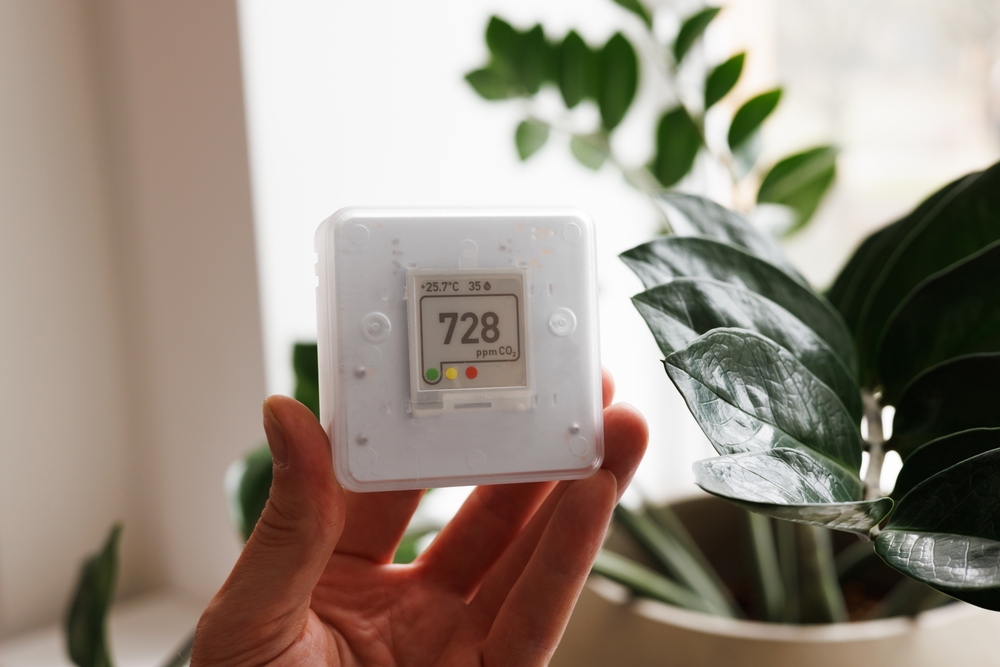
You can monitor humidity using an inexpensive indoor hygrometer and check for obvious moisture sources around your home.
Professional HVAC service is recommended if:
Indoor humidity regularly exceeds 50%
Your air conditioner runs constantly without reducing moisture
Mold repeatedly returns after cleaning
Certain rooms always feel damp
You notice water around HVAC equipment
Indoor comfort never improves despite cooling
These problems often indicate an HVAC performance issue, improper equipment sizing, or ventilation concerns that require professional diagnosis.
Common Local Causes of High Indoor Humidity
1. Long Humid Summers
The extended warm season across eastern Missouri places continuous demand on cooling systems, making humidity control challenging for older equipment.
2. Oversized Air Conditioning Systems
An oversized air conditioner cools a home too quickly without running long enough to remove sufficient moisture from the air.
3. Aging HVAC Equipment
Older systems often lose efficiency over time, reducing their ability to dehumidify indoor air effectively.
4. Poor Ventilation
Bathrooms, kitchens, laundry rooms, and basements all produce moisture that must be properly ventilated outdoors.
5. Air Leaks
Warm, humid outdoor air entering through gaps around doors, windows, attic spaces, and ductwork increases indoor moisture levels.
Prevention and Maintenance
Reducing indoor humidity begins with proper HVAC maintenance and routine home care.
Helpful prevention strategies include:
Schedule seasonal air conditioning maintenance before summer arrives.
Replace air filters regularly to maintain proper airflow.
Use bathroom and kitchen exhaust fans during cooking and showering.
Seal air leaks around windows, doors, and attic access points.
Keep gutters and downspouts directing water away from the home’s foundation.
Consider a whole-home dehumidifier if indoor humidity remains elevated.
Professional maintenance also helps verify refrigerant levels, evaporator coil performance, blower operation, and condensate drainage, all of which affect humidity removal.
Expected Results
When indoor humidity is properly controlled, homeowners often notice:
Improved comfort at higher thermostat settings
Fewer musty odors
Reduced mold and mildew growth
Better sleep quality
Lower allergy triggers
Improved HVAC efficiency
Reduced strain on cooling equipment
Better protection for flooring, furniture, and wood finishes
Results depend on the condition of the HVAC system, insulation, ventilation, and the home’s overall construction.
Common Mistakes
Mistake: Lowering the thermostat dramatically to remove humidity.
Consequence: Higher energy bills without solving the moisture problem.
Better Approach: Have the HVAC system evaluated to ensure it is removing humidity efficiently.
Mistake: Ignoring musty odors.
Consequence: Mold growth may continue behind walls or beneath flooring.
Better Approach: Identify and eliminate the moisture source before mold spreads.
Mistake: Closing too many supply vents.
Consequence: Reduced airflow can decrease HVAC performance and humidity removal.
Better Approach: Keep vents open unless specifically directed otherwise by an HVAC professional.
Common Local Scenario
A homeowner in the St. Louis area notices that the house feels sticky every afternoon despite the air conditioner running almost continuously. Windows begin collecting condensation, and a musty smell develops in the finished basement after several weeks of summer thunderstorms.
An HVAC inspection reveals that the air conditioner is no longer removing moisture efficiently due to reduced airflow and deferred maintenance. After restoring proper system performance, indoor humidity returns to healthier levels and overall comfort improves.
Related Service Solutions
Several HVAC services can improve indoor humidity control, including:
We proudly help homeowners throughout St. Louis, as well as Chesterfield, Ballwin, Kirkwood, Maryland Heights, Webster Groves, Clayton, St. Charles, and surrounding communities throughout the region.
Our technicians understand how local weather patterns affect indoor comfort and air quality across the area.
Cost of Ignoring the Issue
Allowing excessive indoor humidity to continue can lead to mold growth, damaged building materials, higher cooling costs, reduced HVAC lifespan, and worsening allergy symptoms.
Addressing humidity problems early is often less expensive than repairing moisture-related damage later.
What indoor humidity level is recommended for homes in St. Louis?
Yes. Most experts recommend maintaining indoor humidity between 30% and 50%. During humid summers in St. Louis, staying within this range helps improve comfort while reducing conditions that support mold and dust mites.
Why does my house feel sticky even with the air conditioner running?
A sticky feeling usually means excess moisture remains in the air. The cooling system may not be removing humidity efficiently because of maintenance issues, improper sizing, or ventilation problems.
Can high humidity damage my home?
Yes. Excess moisture can damage hardwood flooring, drywall, paint, insulation, furniture, and structural wood over time while encouraging mold growth.
Are older homes in St. Louis more likely to have humidity issues?
Yes. Many older homes throughout neighborhoods in St. Louis have aging insulation, windows, and ventilation systems that allow humid outdoor air to enter more easily.
Does changing my air filter help with humidity?
Yes. A clean filter improves airflow, allowing the air conditioner to operate more efficiently. While it will not solve every humidity problem, regular filter replacement supports overall system performance.
Should I install a whole-home dehumidifier?
Maybe. Homes that consistently experience indoor humidity above recommended levels despite proper HVAC operation may benefit from a professionally installed whole-home dehumidifier.
Can basement humidity affect the rest of my home?
Yes. Moisture from unfinished basements and crawl spaces can circulate throughout the home, reducing indoor air quality and increasing humidity upstairs.
When should I schedule HVAC maintenance in the St. Louis area?
The best time is during the spring before summer humidity arrives. Early maintenance helps ensure your air conditioner is prepared to remove both heat and moisture during the hottest months.
Breathe Easier with Better Indoor Air Quality
Managing humidity is one of the most effective ways to improve comfort, protect your home, and create healthier indoor air. With the right HVAC care and moisture control strategies, local homeowners can enjoy cleaner, more comfortable living spaces throughout every season.
Improve Comfort and Air Quality with Professional HVAC Care
If high humidity is making your home feel uncomfortable, we’re here to help identify the cause and recommend practical solutions that fit your home and your needs.